News and Views

Goal-Setting for ADHDers, Part 3

The last two parts of this series were probably daunting. Makes sense; all this stuff is hard! I mean, I enjoy doing all the planning part, but I have a tendency to over-complicate everything, which naturally makes it easier for it to break down, fall apart, explode in my face.

So how do we set goals, and how do we achieve them, or at least make decent progress on them?

That’s what I’m going to talk about today.

It’s all about simplicity and making things habits.

“But J!” I hear you say, “I have ADHD! I can’t be consistent enough to make something a habit! I chafe at the rigidity of routines! I need variety in my life!”

What if I told you that it’s possible for ADHDers to:

  • Create new habits and
  • Enjoy following routines, all while
  • Incorporating the novelty and variety that our brains crave?

Sounds too good to be true, doesn’t it? Well, it kind of is. Because doing all of this, getting a system in place and maintaining it, isn’t easy. It’s hard work. But it’s worth the effort.
Pinnable image for this post.

Over the last couple of years, I’ve read both Tiny Habits (BJ Fogg) and Atomic Habits (James Clear). Neither book contained new information, but both provided a reframe on how we form habits and why stuff is hard.

First things first, let’s talk about behaviour. There’s a whole branch of psychology that studies behaviour and how people (and animals) learn to do or not do things. Behaviourism as a discipline isn’t awful, but some of the ways this knowledge is applied certainly are. Happily, what we’re going to discuss here is pretty neutral.

The basics of behaviour are pretty simple.

  1. Antecedent—The “trigger” for the behaviour.
  2. Behaviour—What you do in response to the antecedent.
  3. Consequence—What happens as a result of the behaviour.

When you’re trying to figure out how to change a behaviour, it helps a lot if you can figure out what’s going on when you do it and how you feel during or afterwards. That’s where your “why” is hiding.

The other part that’s most important to understand is how the interplay of motivation and ability affect your ability to change your behaviour. Here’s a really simple graph to illustrate.

Illustration of a graph where motivation is on the left vertical axis, with low at the bottom and high at the top; ability is on the bottom horizontal axis, with hard to do on the left and easy to do on the right. The line of the graph starts at the top left (high motivation) and moves toward the bottom right (easy to do), travelling mostly vertically for two-thirds of the height and then slowly curving so that it begins to travel almost horizontally for the right two-thirds of the graph. The space below this line is teal, and it contains the words "Prompts don't work"; the space above the line is white and contains the words "Prompts work."

Motivation is on the left, and ability is across the bottom. The curvy diagonal line is the “sweet spot” where the behaviour is most likely to occur. You’ll notice that when motivation is low, then it needs to be easy to do or it won’t happen. If you’re really motivated to do it, then it’s okay if it’s more difficult.

We’ll, that’s how it works for neurotypical people, at least. Executive dysfunction means our graph is way messier and not so straightforward. But! If we make things as easy as possible, then often we can sidestep our executive dysfunction and actually get stuff done.

In Tiny Habits, BJ Fogg gives a really simple “recipe” for building a habit.

“After I [Antecedent] I will [Smallest first step possible] and I will celebrate by [something that makes you feel great when you do it].”

Tiny Habits, BJ Fogg

There are two things that are really important with the Tiny Habits method. First is the Antecedent, or trigger. Another way to think of this is as a prompt. That’s why the recipe begins with “after…”: the new behaviour is something you’re going to do after something you already do all the time. It’s important to note that if you have low motivation to do something and it is really difficult, then that prompt isn’t going to work.

The other important part of this method is to celebrate immediately after you complete the new behaviour. This ties the excited feeling and burst of dopamine to doing that thing, which will help you remember to do it again next time. Remember, the ADHD brain has trouble with dopamine; most of us either don’t have enough or we don’t use it effectively. That means we are always looking for more. So anything that gives us that surge is something we’re going to want to do more often.

James Clear talks a bit about this (he’s done some studying under Dr Fogg), but his book takes things further and smaller (hence “atomic”—he’s going smaller than tiny). I’ve incorporated both books into my current approach to life and seen some success. So I’m going to explain it now.

The first thing is to figure out what you already do. It doesn’t have to be precise, just make a list of what you do every day, in order. You can do this for several days in a row and then see where things repeat—for example, I get up every morning and use the bathroom, then I make the bed and get dressed, and then I do my hair.

Now that you know what you do, it’s time to decide what you’re going to add.

Just like last week, we begin by dividing our lives into 5 or 6 different categories. This is important because we don’t want to take on too much. The point here is to make stuff easier, not to make it all as complicated as possible!

Now you get to daydream a little. Think about the things you value about each life category, and think about people you know or characters from TV, movies, or books (etc.) who exhibit those values and qualities. The idea is to think about what kinds of things those people do that reflect their values, because that’s going to get you to the next step.

Write down the things those people do and the values and qualities they exhibit. Then write yourself a positive statement that attributes all of these things to you. Start this sentence with “I am the kind of person who…”

You’re probably feeling a bit weird about writing something like “I am the kind of person who puts things away and does the dishes every day” if your house is a perpetual disaster. The thing is, this isn’t lying, it’s stating your values in a positive way, to remind you what’s important to you and why you’re doing the things you’re doing. It’s an aspirational message: you aren’t there yet, but you’re working on it and you’re doing your best.

Once you have a statement for each life category, you get to pick one thing in each that you’re going to start doing. Except you’re going to make that one thing the absolute smallest thing you can possibly think of.

Let’s say that you have a life category for physical health, and your statement is “I am the kind of person who eats well and exercises regularly.”

Thinking about people who eat well, you decide that you want to start eating more vegetables. But that’s pretty vague, and vegetables can be time-consuming to prepare, and they can be expensive.

So you decide to have fresh vegetables for an afternoon snack every day, and that you will get bags of baby carrots or snap peas, or a prepared veggie tray for this purpose every week when you get groceries.

You decide to keep these snacks on the top shelf of the fridge so you see them when you go looking for something to eat.

Your “recipe” reads as follows: “After I feel hungry in the afternoon, I will eat one fresh vegetable as a snack, and I will celebrate by clapping my hands.”

Most things you’re going to consider doing will require a bit of prep work, as with the example of eating more vegetables. The key is to keep the prep simple (e.g., by buying vegetables that are ready to eat and don’t need to be cut up or anything) and set yourself up for success by making whatever you need easily accessible (e.g., by putting the vegetables in a visible location in the fridge). Oh, and you definitely need to choose vegetables that you like and will want to eat!

So I think we’ve covered all of the important bits here. We’ve tied eating vegetables to afternoon hunger and made it easy to remember to eat the vegetables and to actually eat them. We want to be healthy, and we like the vegetables we’ve chosen. We’re celebrating as soon as we’ve eaten the vegetables. All of these things will help us turn eating vegetables into a habit.

What about consistency?

Well, James Clear likes to track his habits and he does regular data reviews and stuff. If you like tracking stuff and like data, go ahead. But it’s not necessary. In fact, BJ Fogg says that the common factoid of “it takes 28 days to form a habit” isn’t really true. And if you miss your habit one day, just do your best to do it again the next day.

That’s it. That’s how you do it. Be as consistent as you can, but don’t worry too much about a missed day here and there.

Obviously breaking things down can be hard. Same with figuring out how to set yourself up for success. But that is part of what Actually ADHD (and its sibling Tumblr, “How Do Thing?“) is for. So if you need help with any of that, don’t be afraid of the ask boxes!

Next week we’ll finish up this month of goal-setting by talking about a strategy I find helpful on Bad Brain Days, and we’ll talk about that all-important “immediacy factor.”

Goal-Setting for ADHDers, Part 2

Last week I wrote about neurotypical goal-setting strategies and SMART goals. This week, I’m going to delve into the concept of “objectives” and whether or not they’re really all that different from goals.

I am a strange person in that I really like breaking things down to make them easier to manage and to make it easier to know what to do. Granted, wanting it to be easier is probably normal, but I’m pretty sure that most ADHDers aren’t very interested in breaking projects or tasks down into their individual components or steps.

When I was working in early intervention, we had goals for the children that were quite broad. Within those goals were objectives: smaller goals that would support the child’s growth and development so they would ultimately achieve the big goal.

As I said last week, I don’t really like SMART goals. I prefer to keep my goals broad and to get more specific with my objectives, not long-term and short-term. Maybe that’s just semantics, but sometimes the words you use matter a lot.

Here’s how I do it.

  1. I divide my life into 5 or 6 areas that I want to keep in mind, and I assign each area a colour. The colours match up with some highlighters I have, and this makes it easy to mark things in my planner. My areas are:
    • Home (light blue)
    • Personal (green)
    • Work (pink)
    • Writing (orange)
    • School (purple)
  2. For each area, I think about what I really want things to be like. Some of them get broken down into sub-categories, like Personal (Physical Health, Spirituality, Emotional/Mental Health, Family, Friends) and Work (I have this and I’m a copy editor, among other things).
  3. I create my broad goals, which are really a picture of my ideal life if you put them all together.
  4. I break down each broad goal into its different components.
    • For example, if my broad goal is to have a clean, comfortable home where we can have people visit, the components will be cleaning the house, decorating the house, and having people over.
  5. Each component now gets its own goal, which is what I call a Long-Term Objective (LTO).
    • Sometimes different components for one area can be worked on at the same time, but usually there has to be some delay.
    • For example, I need to clean the house before I can decorate it or invite people over, but I probably don’t need to decorate before having a party.
    • I don’t give myself any deadlines.
  6. Now I break down the LTO’s into their component parts.
    • In the example of cleaning the house, each room will be a component.
  7. And now I write my Short-Term Objectives (STO’s), which are the smaller goals that I want to accomplish and that will help me achieve my ultimate goal.
    • I still don’t give myself any deadlines. Don’t worry, I’ll explain why next week.

Yes, that’s a lot of work. But doing it this way is actually less intensive if you do it every year, because those ultimate goals don’t tend to change in huge ways, and the steps you need to take also don’t change much. You’ll always need to study physics to be an engineer, and you’ll always need to exercise if you want to build muscle.

What do you think of this so far? Does it make sense to you? Do you think I’m being completely ridiculous here, or do you find yourself liking the idea?

Next week I’ll tell you why I don’t give myself deadlines. Hint: it’s related to a book that was really popular last year.

Goal-Setting for ADHDers, Part 1

If you’re like me, you have spent years trying to figure out this “setting goals and achieving them” thing other people seem to be capable of.

The reasons we struggle with this are varied:

  • we forget about our goals.
  • breaking down big goals into smaller steps is hard.
  • maintaining systems and structure is hard.
  • organization is hard.
  • probably other things I can’t think of right now.

I have a couple of videos up on YouTube about ADHD and life goals, and I’ll be adding to that series soon. Today, I want to talk about what I’ll be covering in this month’s blog posts.

It being January, month of new beginnings, I thought goals would be an appropriate theme.

Pinnable image for this post.

Now, I have vast experience with goals. When I worked in early intervention, we had goals to work on with the children. They were usually written up as in an Individualized Education Plan (IEP), and divided into different domains with 1-5 goals each.

And yes, I have written such plans for myself.

What I have found is that I end up with too many goals and I over-complicate everything. So I don’t really do that anymore except for fun (because yes, I think this kind of thing is fun).

If you look up “goal setting” online, you’ll find lots of similar advice. Basically, you’re supposed to “think big” and write SMART goals.

SMART goals are:

  • Specific
  • Measurable
  • Achievable
  • Relevant
  • Time-bound.

Here’s the problem with that when it comes to ADHD:

Let’s say that want to clean. up my house this year. My SMART goal is “I will get my entire house cleaned up and organized by December 31, 2022.” That’s a huge goal, and overwhelming. I can absolutely break it down by room (breaking down big tasks is something I’m good at), and I can even assign the steps to different days in my planner, etc.—I can do all of the things all of these experts say to do—but there’s no flexibility built into the goal, so if life happens or I have a a Bad Brain Day or whatever, my schedule will be thrown off and I won’t be able to complete the goal.

I don’t think that we are completely out of luck when it comes to goals, though. We just have to be prepared to re-jig things in a way that will work better with our brains and symptoms, and that accounts for inconsistency.

How do we do that?

I’ll start explaining next week.

G is for Getting Diagnosed

The diagnostic process can be stressful or simple, and it varies from clinician to clinician.

It can be as simple as an interview or as complicated as complete neuropsychological testing.

It can be as easy as describing your difficulties in detail to the first clinician you see or as difficult as explaining yourself fifty times to as many clinicians.

The reasons you might be denied a diagnosis are many.

  • You might be (or appear to be) female.
  • You might be a person of colour.
  • You might be autistic.
  • You might have other psychiatric diagnoses already.
  • You might get (or have gotten) good grades in school.
  • You might be Predominantly Inattentive, rather than Predominantly Hyperactive/Impulsive.
  • You might be poor.
  • You might have parents who don’t believe in ADHD.
  • You might have parents who don’t want you labelled.
  • You might have parents who don’t want to deal with the stigma of having a child who has “something wrong with them.”

And that is just a partial list (and the most common ones I see).

The choice to try to obtain a diagnosis is not simple. There are a lot of factors to consider, from how the diagnosis might benefit or hinder you, to your history with psychiatric professionals, to your financial means.

It’s okay to get a formal diagnosis if you just want to know for yourself that you aren’t imagining things, and there’s a real reason why you struggle with so many things.

It’s okay to avoid a formal diagnosis if you have a history of trauma at the hands of medical and/or psychiatric professionals.

It’s okay to get a formal diagnosis if you aren’t struggling as much as someone else.

It’s okay to avoid a formal diagnosis if you can’t afford it and can’t access funding to pay for it.

It’s okay to get a formal diagnosis if you think treatment will help you better manage your life.

It’s okay to avoid a formal diagnosis if you think it will negatively affect how people treat you.

What matters is that you make an informed decision and explore your options. Just remember, the label doesn’t change who you are as a person.

It just helps to explain some of why you are who you are.

F is for Fidgeting

The kid who squirms in his seat during class.

The teen who jiggles her leg under her desk while writing a test.

The young adult whose post-secondary lecture notes are covered in doodles.

The working adult who clicks pens during meetings.

The stay-at-home mom whose feet twitch constantly while she’s reading a picture book to her preschooler.

It’s annoying to other people. Sometimes it’s annoying to us. It makes people think we’re nervous. It makes them think we want to be doing something else.

It’s fidgeting.

Fidgeting is the common word for the little things people do to help ground themselves and maintain their focus. Neurotypical people don’t do it as often as neurodiverse people do, but they do it all the same. Sometimes our stuff is more obvious than the neurotypical stuff, is all.

It’s all a type of stimming.

“Stimming” is short for “sensory stimulation” and it refers to the things we do to positively impact our sensory systems. You’ll usually see it used in conjunction with autism, because autistic people do it the most, but all people who have developmental disorders stim, and that means ADHDers stim, too.

Stimming can calm us if we’re feeling overwhelmed.

It can help us focus if we’re struggling.

It can keep our bodies in motion so that our ears and eyes can do their jobs better.

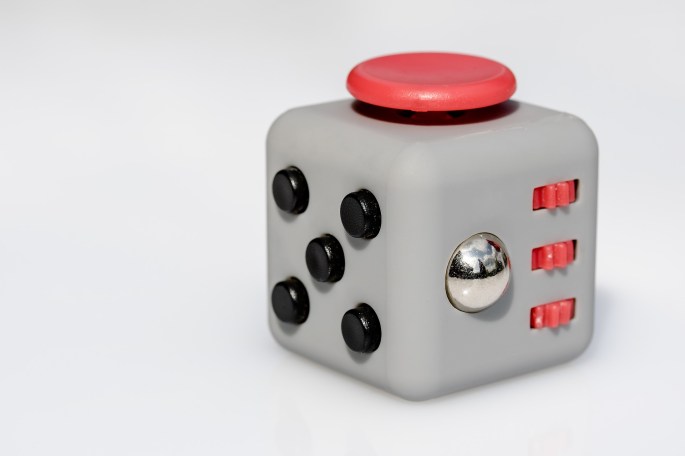
Sometimes a stim or fidget is disruptive, and that’s when we have to find other ways to get the same sensory input. It makes no sense to replace pacing with tapping your knee if what you need is the gross motor vestibular input. Rocking on an inflated rubber seat cushion would probably work much better in such an instance.

The important thing to remember is that we often don’t do these things consciously, and if we do make the conscious decision it’s because we recognize how we’re feeling and have realized that doing this particular thing makes us feel better. So finding ways to accommodate fidgeting/stimming is vital to our success.

How do you fidget or stim, and in what situations?

E is for Executive Dysfunction

Executive functions include the ability to make and follow plans; to control our behaviour and emotional reactions (not our actual emotions, but how we express them); and to manage our time and keep ourselves organized.

If you look at the diagnostic criteria for ADHD in the DSM-5, you will see a list of things that indicate that we have poor executive functions:

  • Doesn’t follow through on instructions and doesn’t finish projects or tasks.
  • Struggles to organize tasks and activities.
  • Loses important/necessary materials.
  • Forgets things on a daily basis.
  • Fidgets a lot.
  • Gets up and moves around when expected to sit still.
  • Makes a lot of noise.
  • Talks a lot.
  • Says things without thinking.
  • Doesn’t wait turns very well.
  • Interrupts in conversations.

In addition to these things, Executive Dysfunction often includes difficulty in getting started (initiation) as well as in switching tasks (inertia).

Some things can be learned: for example, ADHDers benefit from learning to use a planner and lists to keep track of tasks and to break down larger tasks into smaller steps.

Some things can be adapted, such as using a timer to remind yourself that you need to switch tasks.

But many things either can’t be dealt with independently or can’t be adequately managed, even with outside help. And that just ends up being really frustrating, for everyone.

One thing that ADHDers need from the non-ADHDers in their lives is support.

We need support to learn those things we don’t know how to do (and to find a method that will work for us, because often the linear structure of non-ADHD functioning just doesn’t work with our brains), and sometimes we need support to be able to do accomplish the things we can’t accommodate in other ways.

That might mean someone to do things with us.

It might mean someone to encourage us and keep us on task while we work.

It might mean someone to help us work out the steps for a big project.

And it might well mean someone to actually do the work for us, because we cannot do it ourselves consistently enough.

What’s your biggest challenge with regard to Executive Dysfunction?

D is for Disability

ADHD isn’t always a disability. It always causes difficulties for the people who have it, and part of the diagnostic criteria is that the symptoms cause distress in two or more areas of life. But no, it’s not always a disability.

Except when it is.

And that’s not me saying it’s horrible and evil and wrong or whatever, it’s me stating an objective fact.

If I cannot meet my work deadlines because my ADHD-skewed sense of time means I don’t start things until too late, that’s a disability.

If I don’t have clean clothes to wear on a regular basis because my ADHD-provided executive dysfunction means I almost never do the laundry, that’s a disability.

If I can’t maintain friendships because I always say the first thing that pops into my head and it usually offends people, that’s a disability.

If I don’t eat regular meals because I forget to eat even when I’m hungry, or because I forget I’m cooking food and ruin my meals, that’s a disability.

If I can’t maintain friendships because I keep forgetting to reply to e-mails, that’s a disability.

Many ADHDers are not disabled by their ADHD once they are receiving appropriate treatment and have found the thing they are able to hyperfocus on consistently enough to make a career in it.

Some ADHDers are disabled enough that they require support staff in order to maintain their homes and keep a job.

Both types of ADHDer (and everyone in between) are valid and worthwhile.

Don’t shy away from admitting that ADHD is often disabling. Don’t lie about it. Don’t add to the stigma of disability. Rise above that impulse and promote the idea that we are all worthy as we are, regardless of how much support we require. Push the narrative that “success” is as individual as we are, and that we should define our success ourselves and decide how we’re going to get there based on our personal abilities and disabilities.

Is your ADHD disabling? In what way(s)?

C is for Children

Naturally, the idea of ADHD is that it is a disorder of childhood. More attention to adults has been granted over the past couple of decades, but by and large the image is still that of hyperactive little boys. In fact, some insurance agencies don’t cover treatment for adults, and some doctors refuse to even refer adults to be assessed!

But let’s talk about ADHD in children for just a moment, shall we?

Because there are a few things we do need to discuss.

ADHD begins in childhood. Just when, nobody is certain, but the diagnostic criteria state that symptoms must be present prior to age 12 in order to qualify for the diagnosis. Given what we know about typical child development and what is impacted by ADHD, it’s not something that should really be diagnosed prior to age seven.

So here’s the why of all of that.

The behaviours that generally signify ADHD in children (e.g., extreme hyperactivity and/or chattiness, disorganization, lack of focus) are developmentally not fully in place prior to age seven. This means that it is totally possible for a three-year-old to be literally climbing the walls at preschool and not meet the criteria for ADHD by age seven.

In addition, most of what we know about ADHD and how it manifests is based on research performed on male children. It’s only recently (in terms of the science world) that research has been done on females. This means that females are often not recognized as having ADHD, because their behaviours are different from their male fellow ADHDers, even when they have the same type of ADHD.

And on top of all of that, some races and classes are more likely to get the ADHD diagnosis than others. Some are more likely to be dismissed as just being unintelligent or problem students, while others are more likely to end up with medication without a proper assessment, because it’s just easier to diagnose on the fly and get the parents/school out of your face.

All of these things mean that the world of ADHD is tricky to navigate and confusing for people who are newly diagnosed as well as for those who were diagnosed in childhood.

How old were you at diagnosis? Do you have any thoughts as to why it happened then?

B is for Behaviour

ADHD gets treated like it’s a behaviour problem when it isn’t.

That is, the behaviour can be a problem, but that doesn’t mean it should be addressed using behaviour management techniques like behaviour charts, behaviour contracts, and token systems.

See, the things we do as ADHDers are usually related to one of our particular symptoms. This means that we really don’t have a lot of control over how much we talk to our neighbours in class at school, whether or not we’re on time for work, or how well we keep our rooms clean. It’s not that we don’t care about the rules, it’s that we’re impulsive and act before thinking things through completely, we have no real concept of time (it’s fluid and not concrete at all), and we lack the ability to make and follow plans as quickly and easily as non-ADHDers often do.

So when a teacher at school implements one of those behaviour management charts for the whole class, say the kind with the clothespins that move up and down depending on the student’s behaviour, the kids with ADHD (whether or not they’re diagnosed) are going to either focus so hard on meeting those behavioural expectations that they can’t actually take in any of what they’re supposed to be learning, or they’re going to “act out” and lose points every single day but probably will learn more of the material.

Or when a manager or boss writes up an ADHD employee for being late too often and provides a list of what they need to do to correct the issue without discussing possible solutions with the employee, the ADHDer is probably going to struggle to meet these expectations and end up getting fired even though they’re doing their best.

And when a parent tidies up their child’s room when said child is not at home and throws out things that are important to the child (sometimes without realizing it’s important), it erodes the relationship between the child and parent, and it does nothing to help the child begin to look after the cleaning on their own.

What generally will work better in each of these hypothetical situations?

Well, the teacher might discuss the problem with the student and involve them in figuring out ways to be less of a disruption in class. That might mean fidget toys or a seat at the back of the room with permission to pace, or a seat at the front of the room with regular check-ins during class.

The manager might discuss the importance of timeliness with the employee and offer a couple of suggested helps, such as changing start and end times or setting timers to help get out the door.

And the parent might offer to help the child clean up their room right from the start. If the child is older, they might work together to create a map of the room and determine the step they need to follow to get the room cleaned up, and then make a checklist for regular weekly cleaning that the child can follow.

What is a way you’ve been helped by making adjustments to situations instead of struggling to meet expectations? Have you been hindered by the use of behaviour management techniques? In what way?

A is for ADHD

Attention Deficit Hyperactivity Disorder: Inattentive type, Hyperactive/Impulsive type, Combined type.

The image is typically that of a pre-teen boy, literally climbing the walls at school. The reality is as varied as the types listed above; as individual as the millions of people who have the disorder.

ADHD is the teenage girl who hyperfocuses on reading and writing, does well academically, and sucks at making friends, keeping her locker and her bedroom organized, and doing her homework more than 12 hours before it’s due.

It’s the twenty-something accountant who jumps out of planes for fun on the weekends.

It’s the entrepreneur who flits from one project to the next, sticking with an idea only until it’s ready to meet the world.

It’s the little boy who struggles to learn to read because the pictures are more interesting than the words and he keeps losing his place.

It’s the little girl who keeps getting in trouble for talking in class.

It’s the disorganized fifty-something professional whose house is a disaster, whose marriage is a shambles, who is constantly broke despite having a well-paying job, who is late for everything all the time.

There are many faces of ADHD, and these are just a few of them. Share yours in the comments below.

October is ADHD Awareness Month.